
introduction to DPMO Meaning in Text
Quick Answer: DPMO in text means “Don’t Piss Me Off.” It’s an internet slang acronym people use in chats, comments, and captions to warn someone (jokingly or seriously) that they’re getting annoyed. It has nothing to do with the business term DPMO (“Defects Per Million Opportunities”), which shows up in quality control and manufacturing.
You’re scrolling through a group chat and someone drops “DPMO” out of nowhere. No context, no explanation — just four letters sitting there like a warning label. If you’ve landed here searching for the dpmo meaning in text, you’re not alone. It’s one of those acronyms that looks technical but is actually pure internet slang.
In this guide, you’ll learn exactly what DPMO stands for, where it came from, how people use it across WhatsApp, Snapchat, TikTok, and Instagram, whether it’s considered rude, and how to reply when someone sends it to you. By the end, you’ll never have to guess what DPMO means again.
What Does DPMO Mean?
DPMO stands for “Don’t Piss Me Off.” It’s a short, blunt way of setting a boundary in a text conversation without typing out the whole phrase. Instead of writing “seriously, stop annoying me,” people just type DPMO and let the acronym do the talking.
Like most texting slang, DPMO isn’t tied to one single invented moment. It grew the way a lot of internet abbreviations do — through casual typing shortcuts that spread across group chats, comment sections, and captions until enough people recognized them on sight. By 2026, it’s settled in as one of those acronyms that Gen Z and younger millennials use comfortably, while older generations often need to look it up.
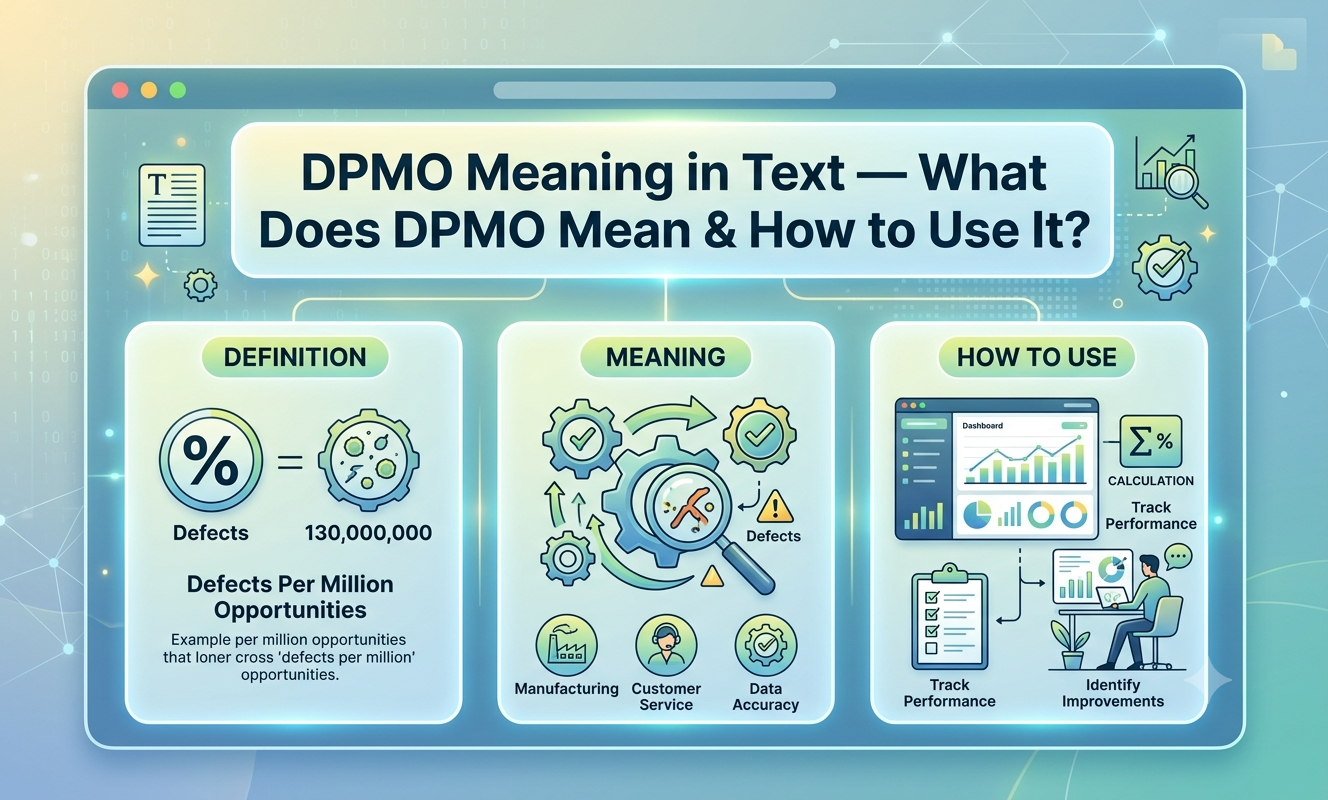
It’s worth noting there’s a completely unrelated use of the same letters. In business and manufacturing, DPMO also stands for “Defects Per Million Opportunities,” a Six Sigma quality metric used to measure error rates in a process. If you saw DPMO in a work report or a statistics class, that’s the meaning you’re dealing with — not the texting slang. Context makes the difference immediately obvious: nobody’s discussing defect rates in a Snapchat reply.
DPMO Full Form Explained
Here’s the acronym broken down letter by letter:
| Letter | Stands For |
|---|---|
| D | Don’t |
| P | Piss |
| M | Me |
| O | Off |
Put together: “Don’t Piss Me Off.” Some people soften it in conversation to mean “don’t push your luck” or “you’re testing my patience,” even though the literal words are more direct.
How to Use DPMO — Real Examples
DPMO can shift in tone depending on who’s saying it and what’s going on. Here are examples across different emotional registers:
| Situation | Example | Emotion |
|---|---|---|
| Friend keeps teasing you | “DPMO, I’m not in the mood today 😅” | Playful warning |
| Someone left you on read for hours | “You saw this at 2pm and reply now?? DPMO” | Mild frustration |
| Sibling borrowed your stuff without asking | “You took my charger again? DPMO fr” | Genuine annoyance |
| Group chat joke goes too far | “okay that one was funny but DPMO 😂” | Half-joking |
| Partner cancels plans last minute | “This is the third time. DPMO.” | Serious frustration |
| Friend keeps spoiling a show | “STOP. DPMO I haven’t watched it yet” | Urgent/serious |
| Coworker keeps interrupting in a casual Slack DM | “lol DPMO let me finish typing” | Lighthearted |
| Someone repeats an inside joke that’s gotten old | “if you say that one more time DPMO” | Teasing |
| Reacting to a meme calling you out | “DPMO 💀 how’d you know” | Self-deprecating humor |
| Setting a real boundary in an argument | “I need you to stop bringing this up. DPMO.” | Firm, serious |
Notice the pattern: with an emoji or laughing text, DPMO usually reads as playful. Without one, especially in a tense conversation, it reads as a genuine warning.
DPMO on Different Platforms (2026)
Slang doesn’t behave the same way on every app. Here’s how DPMO tends to show up depending on where you see it.
On WhatsApp
WhatsApp conversations tend to be more personal — friends, family, close contacts. DPMO here usually shows up in one-on-one chats or small group chats, often paired with a laughing emoji to keep things light, or left blunt when someone’s genuinely annoyed.
On Snapchat
Snapchat’s fast, disappearing-message format suits short slang perfectly. DPMO often appears as a quick reply to a snap or chat that pushed someone’s buttons — sent fast, meant to be read in the moment, and then gone.
On TikTok
On TikTok, DPMO shows up more in comments and captions than in private messages. Creators and commenters use it as a reaction — either genuinely calling something annoying or using it ironically, almost like a punchline to a joke.
On Instagram
Instagram usage leans toward captions, story replies, and comment sections. It’s common to see DPMO dropped under a post that’s mildly provocative or teasing, functioning almost like a caption tag rather than a direct message to one person.
Across all four platforms, the throughline is the same: DPMO thrives in short-form, casual spaces where a full sentence would feel like overkill. It’s built for speed, not formality.
Is DPMO Rude or Offensive?
This depends heavily on context, tone, and relationship.
The case that it’s not offensive: Among friends, DPMO is usually harmless. It functions more like a playful nudge than an actual threat — closer to “quit it” than anything hostile. Paired with an emoji or in a joking exchange, most people read it as lighthearted.
The case that it can come across as rude: Sent bluntly, with no emoji, in the middle of a tense conversation, DPMO can land as sharp or dismissive — especially to someone who’s older, unfamiliar with the slang, or already feeling attacked. Because the literal words are somewhat aggressive (“don’t piss me off”), it can escalate a disagreement if the other person takes it seriously rather than as banter.
The safest read: check the relationship and the conversation’s tone before assuming either way. Between close friends, it’s almost always fine. In a more formal or unfamiliar exchange, it can be misread.
How to Reply to DPMO
Not sure what to say back when someone sends you DPMO? Here are a few directions depending on the tone you want to strike:
| Their Message | Your Reply | Tone |
|---|---|---|
| “DPMO 😂” | “lol my bad, I’ll stop” | Playful de-escalation |
| “DPMO.” (no emoji) | “okay, what’s wrong?” | Concerned, sincere |
| “DPMO fr” | “noted 😅 truce?” | Light apology |
| “DPMO, I mean it” | “got it, I’ll back off” | Respectful, taking it seriously |
| “DPMO 💀” | “haha okay okay” | Matching the humor |
| “DPMO” (out of nowhere) | “wait what happened?” | Clarifying |
The key is matching their energy. If they’re joking, joke back. If they sound genuinely frustrated, it’s usually better to ask what’s actually wrong rather than brushing it off.
DPMO Alternatives and Similar Slang
DPMO isn’t the only acronym people use to signal annoyance or set a boundary. Here are some similar terms:
| Slang | Meaning |
|---|---|
| STFU | “Shut The F Up” — blunt, more aggressive |
| IDC | “I Don’t Care” — dismissive, not necessarily angry |
| GTFO | “Get The F Out” — telling someone to leave or stop |
| SMH | “Shaking My Head” — disappointment or disbelief |
| NVM | “Never Mind” — dropping a topic, sometimes out of frustration |
| TBH | “To Be Honest” — often precedes a blunt statement |
| IYKYK | “If You Know You Know” — inside-joke context marker |
| FR | “For Real” — emphasizing sincerity, often paired with frustration |
DPMO tends to sit somewhere in the middle of this list — more pointed than “IDC,” but less harsh than “STFU.”
Frequently Asked Questions
Q: What does DPMO mean in text? A: DPMO means “Don’t Piss Me Off.” It’s slang used to warn someone, playfully or seriously, that they’re getting on your nerves.
Q: Is DPMO the same as the business term DPMO? A: No. In business and Six Sigma quality control, DPMO stands for “Defects Per Million Opportunities,” an entirely unrelated statistical measure. The texting slang and the business term just happen to share the same letters.
Q: Is DPMO rude to send someone? A: It depends on context. Between friends, especially with an emoji, it’s usually playful. Sent bluntly in a tense conversation, it can come across as harsh.
Q: Which platforms is DPMO most common on? A: It shows up across WhatsApp, Snapchat, TikTok, and Instagram, most often in casual chats, comments, and captions rather than formal messages.
Q: How do I know if someone is joking or serious when they send DPMO? A: Look at the emoji, punctuation, and the conversation leading up to it. A laughing emoji or lighthearted context usually signals a joke; a blunt message with no emoji, especially after a disagreement, usually signals they mean it.
Q: Should I use DPMO in a professional setting? A: No — it’s casual internet slang and doesn’t belong in work emails or formal messages, even informal ones with colleagues you don’t know well.
Final Thoughts
DPMO is a simple, four-letter way of saying “back off” or “you’re testing my patience,” and its meaning shifts depending on tone, emoji use, and the relationship between the people texting. Whether it’s a joke between friends or a real warning, understanding the dpmo meaning in text helps you read the room instead of misinterpreting a message. Bookmark this page next time a confusing acronym shows up in your messages — chances are, we’ve covered it.
Also read SPWM Meaning in Text — What Does SPWM Mean & How to Use It in 2026?
