
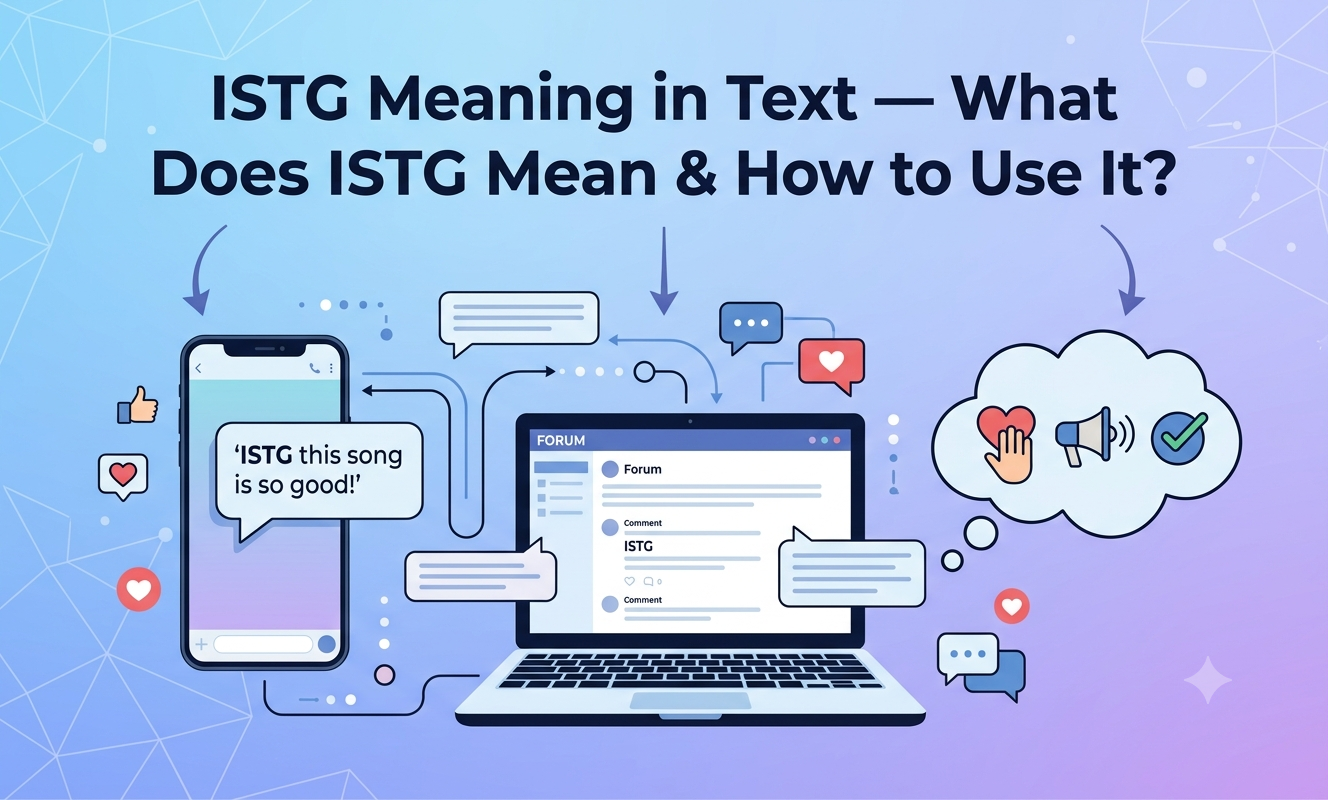
Quick Answer: ISTG stands for “I Swear To God.” It’s a texting abbreviation used to add emphasis, show frustration, excitement, or sincerity in a message — for example, “ISTG if you cancel again I’m done.” It’s casual, common among teens and young adults, and works in almost any strong emotional context.
Introduction
Ever gotten a text that just said “ISTG” and had no idea what your kid, friend, or partner meant? You’re not alone. This short abbreviation shows up constantly in group chats, comments, and DMs, and if you didn’t grow up texting in shorthand, it can look like a typo.
ISTG meaning in text is simple: it stands for “I Swear To God.” People use it to make a point feel more serious, more dramatic, or just more real. It can mean someone is annoyed, amused, threatening (jokingly), or being completely sincere — the tone depends entirely on the context around it.
In this guide, you’ll learn exactly what ISTG means, where it came from, how to use it correctly, how it shows up differently on WhatsApp, Snapchat, TikTok, and Instagram in 2026, whether it’s considered rude, and how to reply when someone sends it to you. By the end, you’ll never have to guess again.
What Does ISTG Mean?
ISTG is a texting abbreviation for “I Swear To God.” It’s used the same way people use “I swear” or “I promise” in spoken conversation — to emphasize that what they’re saying is true, or to express a strong emotion.
The phrase “I swear to God” has been part of everyday English speech for generations, often used to add weight to a statement, whether that’s a promise, a complaint, or a joke. As texting and instant messaging took over as the primary way young people communicate, common spoken phrases naturally got compressed into acronyms to save time and fit within character limits.
ISTG became especially popular alongside other emphasis acronyms like “OMG,” “LOL,” and “FR” (for real) during the rise of SMS and early social messaging apps. By 2026, it’s a firmly established part of everyday digital slang, used across texting apps, social media comments, and even in captions, especially among Gen Z and younger Millennials.
Unlike some slang that fades quickly, ISTG has stayed relevant because it fills a specific gap: it lets someone express genuine emphasis in text form, where tone of voice is missing, without typing out the full phrase.
ISTG Full Form Explained
Since ISTG is an acronym, here’s exactly what each letter represents:
| Letter | Stands For |
|---|---|
| I | I |
| S | Swear |
| T | To |
| G | God |
Put together: I Swear To God.
It’s a direct, letter-for-letter shorthand — there’s no hidden or alternate meaning behind the acronym itself. The variation in meaning comes entirely from tone and context, not from the letters.
How to Use ISTG — Real Examples
ISTG is flexible. It can express frustration, excitement, disbelief, sincerity, or even affection, depending on the sentence around it. Here are real examples across different emotional contexts.
| Situation | Example | Emotion |
|---|---|---|
| Annoyed at a friend | “ISTG if you’re late one more time I’m leaving without you” | Frustration |
| Excited about news | “ISTG I just got the internship!! I’m shaking” | Excitement |
| Reacting to something funny | “ISTG this is the funniest video I’ve seen all year” | Amusement |
| Making a sincere promise | “ISTG I’ll pay you back on Friday” | Sincerity |
| Expressing disbelief | “ISTG did that really just happen” | Shock |
| Venting about a sibling | “ISTG my brother ate my leftovers again” | Irritation |
| Warning someone playfully | “ISTG don’t touch my charger” | Playful threat |
| Complimenting someone | “ISTG you look so good today” | Affection |
| Reacting to embarrassment | “ISTG I wanted to disappear when that happened” | Embarrassment |
| Confirming plans | “ISTG I’m coming this time, I promise” | Reassurance |
Notice how the same three letters shift meaning completely based on what surrounds them. That’s the key to understanding — and using — ISTG correctly.
ISTG on Different Platforms (2026)
Texting slang doesn’t behave the same way everywhere. Here’s how ISTG typically shows up across the most-used platforms in 2026.
On WhatsApp
WhatsApp remains one of the most popular messaging apps globally, and ISTG is common in both one-on-one chats and group threads. It’s often used with emojis (😭, 💀, 🙏) to boost the emotional tone, since WhatsApp conversations tend to be longer and more personal than quick social media comments.
On Snapchat
On Snapchat, ISTG is used heavily in chat captions and quick replies to Snaps. Because Snapchat conversations are fast-paced and disappear quickly, short reactions like ISTG are ideal — they convey a strong reaction without requiring a full sentence.
On TikTok
In TikTok comments, ISTG is often used to react to relatable or funny content, frequently paired with phrases like “ISTG this is so real” or “ISTG I felt this.” It’s also common in duet and stitch captions to express agreement or shock at the original video.
On Instagram
On Instagram, ISTG appears frequently in comment sections, Story replies, and captions. It’s often used to express genuine excitement or disbelief about a post, especially on close friends’ Stories where tone is more casual and personal.
Across all four platforms, the core meaning stays the same — the difference is mostly in pacing and how much emoji support is added around it.
Is ISTG Rude or Offensive?
ISTG is not inherently rude or offensive. It’s a casual expression, similar to saying “I swear” out loud, and in most contexts it’s harmless.
However, context matters:
- Casual/friendly context: Almost always fine — used for emphasis, excitement, or light complaints.
- Confrontational context: If paired with anger or used in an argument, it can come across as aggressive, similar to how “I swear to God” can sound threatening when said with a harsh tone.
- Formal or professional settings: ISTG (and slang in general) should be avoided in work emails, school assignments, or formal communication, since it can seem unprofessional.
For parents wondering if this is something to worry about: in the vast majority of everyday teen conversations, ISTG is used the same way “OMG” or “seriously” would be — as an emotional emphasis word, not a red flag.
How to Reply to ISTG
Replying to ISTG depends on what emotion the sender is expressing. Here are common ways to respond appropriately.
| Their Message | Good Reply | Why It Works |
|---|---|---|
| “ISTG I’m so tired” | “Same, get some rest” | Shows empathy |
| “ISTG you won’t believe this” | “Wait what happened?” | Invites them to explain |
| “ISTG I’m gonna fail this test” | “You’ve got this, you studied a lot” | Offers reassurance |
| “ISTG that was hilarious” | “I know 😭 I can’t stop laughing” | Matches their energy |
| “ISTG I’ll be there in 5” | “Okay, see you soon!” | Simple confirmation |
| “ISTG don’t do that again” | “Okay okay, I won’t 😅” | De-escalates lightly |
The general rule: match the tone. If they’re excited, be excited back. If they’re venting, acknowledge it before responding with advice.
ISTG Alternatives and Similar Slang
ISTG belongs to a broader family of emphasis and reaction acronyms used in texting. Here are similar terms worth knowing.
| Term | Meaning |
|---|---|
| FR | For Real |
| ONG | On God |
| ISTFG | I Swear To Freaking God (stronger version of ISTG) |
| NGL | Not Gonna Lie |
| TBH | To Be Honest |
| SMH | Shaking My Head |
| DEADASS | Being completely serious |
| I SWEAR | Full, non-abbreviated version of ISTG |
Many of these are interchangeable with ISTG depending on regional and generational slang preferences — “FR” and “ONG” in particular are often used almost identically to ISTG in 2026 texting culture.
Frequently Asked Questions (FAQ)
Q: What does ISTG mean in text? A: ISTG means “I Swear To God.” It’s used to add emphasis to a statement, whether expressing frustration, excitement, sincerity, or disbelief.
Q: Is ISTG the same as ISTFG? A: They’re related — ISTFG is a slightly stronger, more intense version meaning “I Swear To Freaking God,” often used for more dramatic emphasis.
Q: Is it okay for kids to use ISTG? A: In most everyday contexts, yes. ISTG is casual slang similar to saying “I swear” out loud and isn’t considered harmful, though it’s best avoided in formal writing like schoolwork.
Q: What’s the difference between ISTG and FR? A: Both are used for emphasis, but ISTG leans more toward strong emotional reactions (frustration, shock, excitement), while FR (“for real”) is often used to confirm agreement or sincerity in a more neutral tone.
Q: Can ISTG be used in a positive way? A: Absolutely. It’s frequently used to express excitement, compliments, or genuine happiness — not just complaints or frustration.
Q: Where did ISTG originate? A: It comes from the everyday spoken phrase “I swear to God,” shortened into acronym form as texting and instant messaging became the dominant way people communicate, especially among younger users.
Conclusion
ISTG is one of those texting abbreviations that seems confusing at first but becomes second nature once you know the context. At its core, ISTG meaning in text is simple — “I Swear To God” — but the emotion behind it can shift from frustration to excitement to sincerity depending on how it’s used.
Whether you’re seeing it on WhatsApp, Snapchat, TikTok, or Instagram, the acronym works the same way: it adds emphasis where tone of voice would normally do the job. Now that you know how to read it, use it, and reply to it, you’ll never be left confused by a text again.
Bookmark this page so you always have a quick reference the next time a new slang term shows up in your messages.
Also read WTW Meaning in Text — What Does WTW Mean & How to Use It?
